
Lord, enlighten my darkness!
And now these three remain: repentance, tears, and humility
More and more Romanian children in the diaspora are growing up without their mother tongue because their “integration” is considered more important than preserving their roots. But what really happens when you abandon your own language? Is it an efficient adjustment, or a loss of identity?
For young people living between two worlds, two languages, and sometimes two identities, Mr. Virgiliu Gheorghe raises a crucial question: Can you become a citizen of the world if you do not first know who you are? (A.G.)
Regarding the Romanian diaspora, I began looking into where children encounter difficulties in school. I was told: in Italian, in German. I was surprised. How could that be possible? The paradox was precisely that these children knew only the language of the country where they lived, because Romanian was no longer being cultivated at home. I have witnessed situations in which Romanian parents spoke to their child in Italian, even in my presence.
Then I began to analyze the phenomenon more closely and discovered that there are serious problems. Some parents speak Romanian to each other but use only the language of the host country when speaking to their child, hoping to “help” the child integrate better and succeed in life. The intention is good, of course: integration, adaptation, professional success.
But one essential truth is being overlooked. Great Romanian figures—Horia Hulubei, George Emil Palade, George Enescu, Constantin Brâncuși, Eugène Ionesco, Mircea Eliade, Ioan Petru Culianu—mastered Romanian thoroughly before mastering other languages. Culianu knew fifteen foreign languages, but he had a solid foundation in his mother tongue. Emil Cioran, who wrote in French and became one of the language’s greatest stylists, could speak only Romanian in the final years of his life, after developing Alzheimer’s disease.
All of this shows how profoundly human development is connected to one’s mother tongue. Starting from these observations, about ten years ago I began studying the phenomenon. I researched the relevant literature and was amazed to discover that studies confirmed what I had intuitively suspected: a strong command of one’s mother tongue is one of the best predictors of a child’s cognitive development, ability to learn other languages, academic success, professional achievement, and, ultimately, fulfillment as a human being. This is a scientifically established fact.
Language Is the Most Important Vehicle of the Human Person
Observing this phenomenon, British authorities—at least in Essex—were sending letters to immigrant families recommending that they teach their children their mother tongue well, so that they could later learn English properly. It had been observed that many children were unable to integrate socially precisely because they lacked a solid foundation in their own language. You cannot integrate without an identity. The prerequisite for integration is one’s own identity, not its erasure. We cannot enter a community as “nobody.” In a symphony, every instrument brings its own distinctive tone; you must come as someone, not as an absence.
From a neuropsychological perspective, these things are extremely interesting. Our brains and their neural networks develop on the basis of certainties. Every house needs a solid foundation in order to remain stable. As the Gospel says, a house built on sand cannot stand. What is the foundation of our minds? Our certainties. And identity is the most important of them.
To be identical with yourself, with your people, to possess a consciousness of belonging, means having a stable foundation—not only culturally, but neurologically and even genetically. Modern research increasingly confirms how deeply our development is connected to these fundamental points of reference.
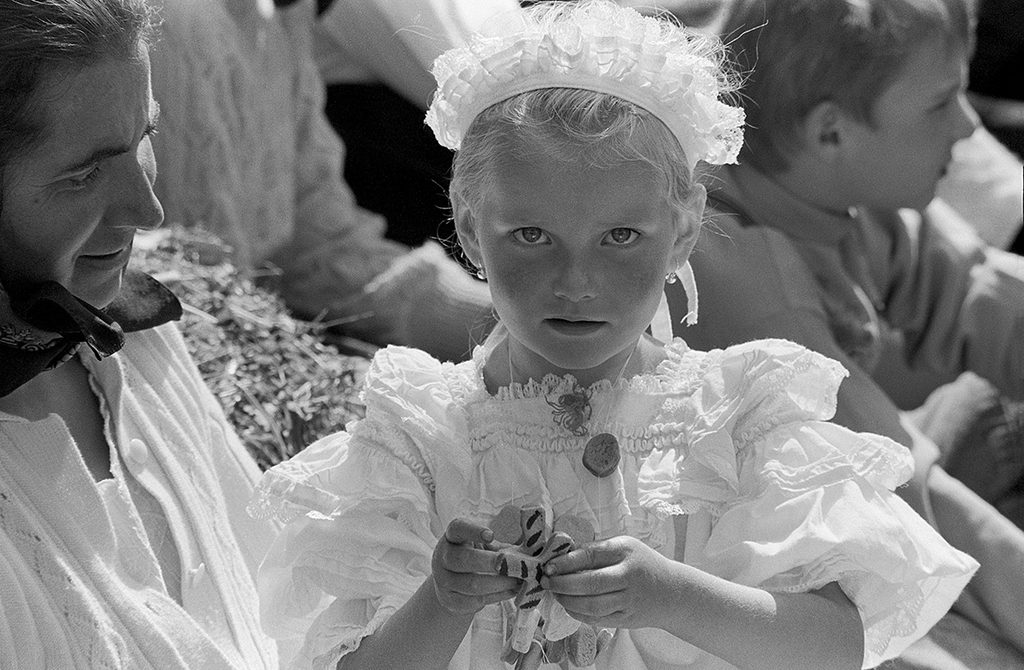
Language is perhaps the most important vehicle of the human person. Scripture tells us: “In the beginning was the Word, and the Word was with God, and the Word was God.” The Greek term Logos means not only “word,” but also reason, meaning, and an ordering principle. God creates through the Word—“He spoke, and it was done.” The Word possesses a creative, demiurgic power.
Human beings, too, live through words. Why do we need to hear “I love you”? Because those words nourish us. Words can build, but they can also destroy. They possess their own energy and are deeply rooted in our being, connected to the emotional experiences of our earliest years. And the first language that structures our existence is the language in which we learn to love, to fear, and to hope—our mother tongue.
Why the mother tongue? Because it is the native language of the mother. It is the language she knows best and through which she naturally communicates all the emotions, experiences, and inner life she has accumulated since her own earliest childhood. It is the language that the mother herself began to absorb while still in her own mother’s womb—just as each of us begins learning our mother tongue while still in the womb.
Recent studies show that, when we are born, we already recognize the phonemes of our mother tongue rather than those of another language. We hear our mother’s voice, its rhythm and intonation, its distinctive sounds. The process of acquiring language begins before birth. And after we enter the world, we continue integrating these sounds into an extraordinarily complex network of emotional and linguistic associations—so complex that even today we cannot fully describe or analyze it. A child learns words, and we often wonder: “Where did they pick that up? How do they know what it means?”
If You Want a Child to Get a Good Start, Teach Them to Think in Words
Theological tradition offers a fascinating perspective on this mystery. We are told that Adam “gave names” to things. But how can you give things names? Father Dumitru Stăniloae explained that human beings can name reality because the divine Logos—the creative Reason—is already inscribed in the mind, by virtue of our having been created in the image of God. We do not simply know things from the outside; in a certain sense, we recognize them. Their inner principle is already present within us, and our enlightened mind brings it to the surface through words.
Thus, a word is not merely a conventional sound, but an act of recognition. The mind “turns on” a light that reveals the meaning of things, and this light is, ultimately, the Light of God. When the mind is darkened, this recognition becomes difficult. But when it is clear, a person can name what, in a sense, he already carries within himself. This is the profound mystery of the word.
Every people has its own language. Why? Because language is connected to identity, experience, and a particular way of being and living in the world. Language is not merely an instrument of communication; it is the expression of a history, a sensibility, and a collective consciousness.
Contemporary neuropsychological research confirms this reality in a remarkable way. All of it emphasizes the same point: a solid knowledge of one’s mother tongue is one of the most important factors in cognitive development and later success in life. If you want a child to get a good intellectual start, teach them to think in words. A close relationship with language is essential.
Read stories to your child! Ask questions! Answer their questions! Encourage them to put their thoughts into words. In this way, the child learns to structure the world rationally through language. On this solid foundation, they can then learn a second language, a third language. Far from being a disadvantage, bilingualism is a great asset. Music, too, is a language. That is why studying music supports cognitive development: it also structures reality through a system of signs, rhythms, and relationships.
So what we should understand is that language—and above all the mother tongue—is not a secondary detail of education, but the foundation upon which our entire intellectual and personal development is built.
Fundamentally, teaching your child their mother tongue may be one of the greatest gifts you can give them. Just as you give a child milk to ensure proper nourishment and a healthy start in life, so you give them language to nourish their mind and soul. And, in a certain sense, language is even more important than physical nourishment, because through it you lay the foundations of their identity.
Through the mother tongue, you create the neurological and neuropsychological conditions through which a child comes to understand the world. You shape their inner structure, the foundation upon which they will later be able to grow in any other language and within any other cognitive framework. Research suggests that the mother tongue is established in a particular area of the brain; metaphorically speaking, there is dedicated “hardware” for it, while other languages—the second, third, and fourth—are built upon this foundation.
The Mother Tongue Is One of the Deepest Roots of Our Being
That is why Romanians, in general, learn foreign languages with great ease. From my experience in Europe and elsewhere in the world, I have rarely encountered a people who adapt so quickly to a new language and eventually speak it almost like native speakers. But the essential condition is a thorough knowledge of one’s own language.
Unfortunately, many parents who move abroad no longer teach their children Romanian, believing that this will help them integrate. In reality, they may be taking away the very foundation of their identity. Without a linguistic identity, a child lacks one of life’s most important foundations. Studies show that young people who do not have a firmly developed sense of identity generally achieve poorer results in school and in their professional lives.
Research conducted, for example, among Hispanic communities in the United States shows that children who know, love, and affirm their cultural and linguistic identity perform better academically. Why? Because they know who they are.
This is not about saying, “We are the best.” It is about being who you are. You must first be Romanian in order to then also be European and a citizen of the world. Your own identity does not exclude openness; on the contrary, it makes it possible.
Unfortunately, many parents do not realize that this opportunity—to give their child a strong linguistic identity—is one of the greatest investments they can make in their future. They believe that by giving their child an exclusively German, Italian, or English identity, they are giving them something more. But their child is Romanian. And that reality cannot be erased simply by changing the language spoken at home.
Our cultural profile has certain distinctive features: Romanians, generally speaking, are not a violent people. They react strongly when they perceive a serious injustice, but they do not have an innate inclination toward aggression. There is also a remarkable adaptive intelligence: with relatively little effort, Romanians can achieve notable results. Yet this natural ability must be supported by seriousness and consistency—values that previous generations cultivated more intensely.
The interwar period was a time when Romania was strongly consolidating its identity. Later, communism fractured many of these points of reference. All the more so today, the responsibility falls on the family to give children solid roots, because without roots there can be no growth.
And the mother tongue is one of the deepest roots of our being.
(to be followed)
with Virgiliu Gheorghe Vlăescu
The whole interview can be watched here:
Article published in issue 206 (April 2026) of Familia Ortodoxă magazine
The magazine is available for purchase from:
- Digital platform – online digital edition
- Romania store – printed edition, delivered in Romania
- International store – printed edition, delivered abroad
You can also subscribe for one year or six months, either individually (one subscription) or as a group (up to 10 subscriptions delivered to the same address, with discounts of up to 40%):
- Printed edition, delivered abroad: subscribe here
- Online digital edition: subscribe here
- Printed edition, delivered in Romania: subscribe here
Trackbacks and Pingbacks