
You cannot integrate without identity!
It is not easy to speak about the work of grace, especially today. And yet, by God’s providence and for our benefit, Father Cezar Axinte introduces us to the highest and most necessary work of man on earth: prayer. More than that, Father also shows us the path toward it—repentance, tears, and humility, the steps through which the soul is cleansed and opens itself to the work of the Holy Spirit. For acquiring the Holy Spirit is the true purpose of the Christian life. We do not know how many people, moved by these words, will set out on this path. But if even one person is inspired by them and begins this work, then these words were not spoken in vain. For, as Saint Seraphim of Sarov says, “Acquire peace, and thousands around you will be saved.” (Virgiliu Gheorghe)
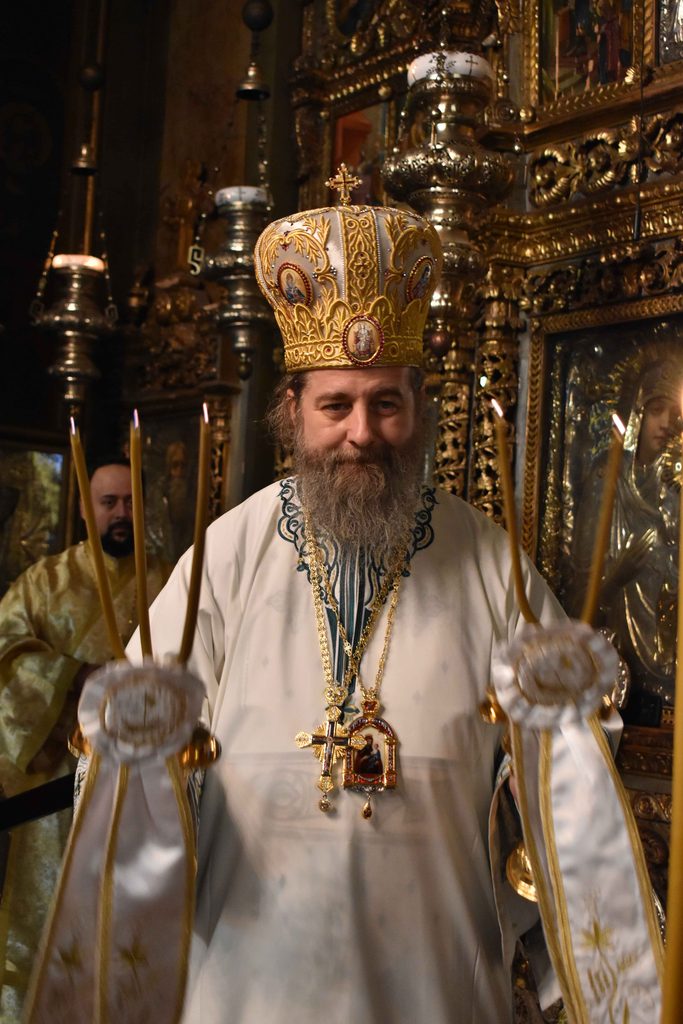
− Father Cezar, Saint Gregory Palamas prayed for a long time with these words: “Mother of God, enlighten my darkness!” How do we realize how much darkness there is in our soul?
− You cannot recognize the darkness within you until the light comes and illuminates it. So, for each of us, as I learned from the Fathers of the Church, the foremost purpose of our life is to acquire the Holy Spirit, to acquire grace. Grace is the light that illuminates the darkness. As long as you have not recognized the sinful state you are in, as long as you have not felt the consolation of the Holy Spirit, or as long as you do not have grace, you are far from truly being a human being. Because, ultimately, the purpose of the spiritual life is to acquire grace, the light that shines within you. Then you see who you truly are; you see the sinful state you are in, and this is a great gift from God.
− And how does grace come?
− The Holy Apostle Paul asked: “Did you receive grace? Did the Holy Spirit come upon you?” “We did not even know that there was a Holy Spirit.” And so, alongside a spiritual guide and by living a life within the Church—a spiritual life that is a life of communion with our fellow human beings and with God—that is where you learn what the Holy Spirit is, what grace is. You hear about it from one person, you hear about it from another, and you want it for yourself. You hear these words: “Taste and see that the Lord is good!” Psalm 33:8. And once you have tasted the Lord, you need nothing else.
Repentance Is the Dynamic of Eternal Life
− Father, you spoke about losing grace. How do we know that we have lost grace?
− There is no way for you to know unless you have known it in the first place. Certainly, all of us in the Church have experienced grace in one way or another. It is impossible for someone not to have known grace, because from infancy, from the moment of baptism, we have been clothed in this garment of grace. And then, at some point during childhood, we experienced the loss of innocence. At eight, ten, or eleven years old. Once society presented us with its distorted image, we felt that grace had diminished, that something within us had been lost. That is why we speak of “children who never had a childhood.” In fact, we are not talking about that childlike happiness that comes from having candy and toys; we are talking about innocence of heart, purity of heart.
Later, of course, we came to know the work of grace through some miracle that God performed in our hearts or through someone close to us. Grace is providential grace, but it is also sanctifying grace. Ultimately, God’s grace, or God’s uncreated energies, holds the stars in the cosmos and the entire universe together. But there is also the sanctifying grace present in the Orthodox Church. This is a different kind of grace, experienced differently from the grace that holds everything in balance. We experience it at the Divine Liturgy, at a wedding, or in the presence of someone who lives a holy life. Or even within our own hearts, especially for those who have a greater desire or inclination toward the spiritual life, toward what Father Arsenie Papacioc called the “life of spiritual sensitivity.”
So, throughout the various stages of your life, you feel when you are lacking grace or when grace has diminished. A person who pays attention to this realizes that something has dried up within him, and then he seeks again and runs to the Mother of God, runs to Christ. This is very important. One of the best ways to recognize both the acquisition of certain spiritual gifts and the loss or diminution of grace is through conversation with one’s spiritual father. In the Sacrament of Confession, grace can actually be felt very clearly. Then, of course, the person receives guidance from his spiritual father and realizes that he has fallen short in some way. Somewhere, he has done something wrong, or there has been a decline in his spiritual life.
− Father Rafail Noica said: “Repentance is the dynamic of eternal life.” How should we understand these words?
− Yes. I would dare to say that repentance is, in fact, the mystery that engages you in a life-and-death struggle with this life, with the spiritual life. It is the only thing that practically trains you for the battle. We have the Sacraments of the Church, which we often attend as spectators. I mean, in most cases. Some of us do not understand the Holy and Divine Liturgy. Some attend a wedding and pay attention to the wedding guests’ outfits. Others may attend an ordination or participate in the other Sacraments of the Church. Yet in none of these does a person engage as deeply as he does in the Mystery of Repentance.
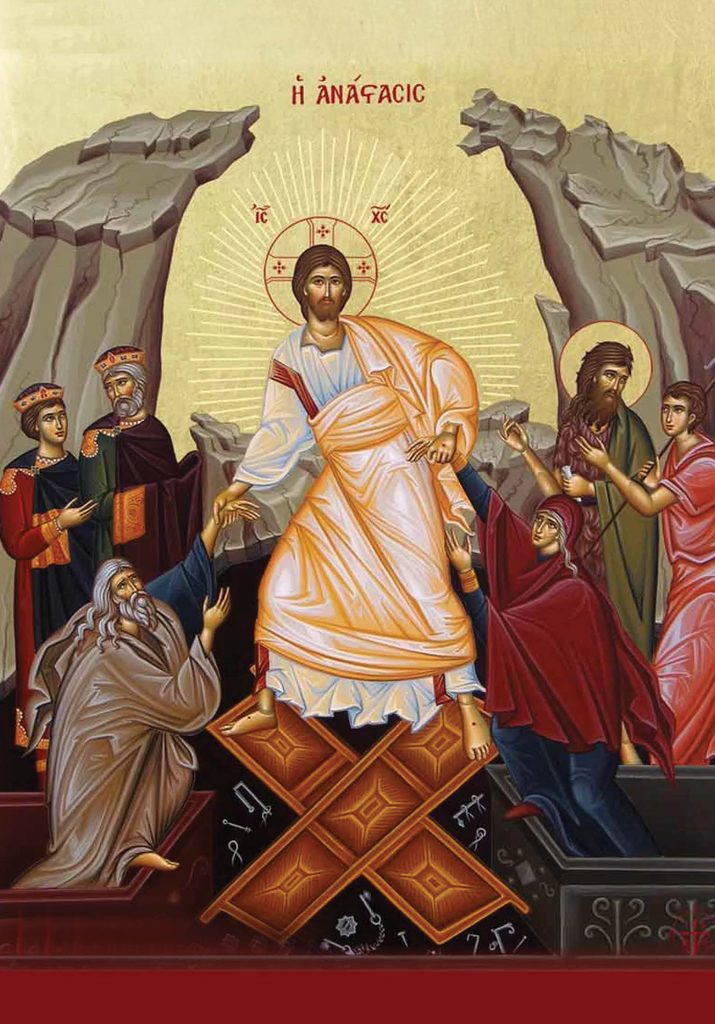
We have a prayer called the Jesus Prayer, or the Prayer of the Heart: “Lord Jesus Christ, have mercy on me!” This “have mercy on me” is valid even for a pagan. God has mercy even on a pagan. For God loves both the righteous and the unrighteous; He makes the sun rise on both the good and the evil.
But Father Arsenie said something that became his testamentary word: Jesus, Jesus, Jesus, forgive me! This “forgive me” contains the extraordinary mystery of repentance, of the human heart’s commitment to the spiritual struggle. Clearly, the foremost work of our life, all the way to our final breath, is repentance. This is the dynamic of life. Everything is contained within it.
It is contained in the Forgive me! of the thief who was astonished by Christ’s humility. Christ prayed for those who spat on Him. Christ, in His humanity, became the advocate of those who mocked Him before the Father and said: Father, forgive them, for they know not what they do! And at that moment, the thief’s mind was transformed, and he asked for forgiveness—he repented on the spot.
You should know that the thief on the right also mocked Christ for a time, until he felt the claws of death sinking into him. But it was neither the fear of death nor anything else that changed him. It was Christ’s humility and Christ’s love for mankind that changed his mind, and there we see the power of human repentance. Although the word repentance is the Cinderella of the world of faith, Father Rafail truly struck at the heart of the spiritual struggle.
Our Machine Gun Is the Prayer Rope
− Father Cezar, you mentioned the Jesus Prayer. You are a married priest and have many spiritual children. How can laypeople practice the Jesus Prayer when they have very little time for prayer?
− People today are multitasking. Poor souls, many have several jobs because otherwise they cannot survive; they do not have enough money or, well, some work extremely hard for things that would not actually be of any benefit to them. Yet God has not abandoned us even in this situation. Even though we are overcrowded and overworked, so to speak, He has not left us without a weapon.
So laypeople, just like monks, wage a spiritual battle. When we speak about laypeople, we mean people in the Church who participate in the liturgical life, go to confession, and receive Communion regularly, sometimes very frequently. For them, there is the possibility of saying the Jesus Prayer during those stretches of otherwise “dead” time.
People say, “I wasted time traveling.” Well, don’t waste time traveling anymore—redeem that time. Wherever you are and at any time, you can say the Prayer. You can turn inward on the subway, on the bus, in your own car, and, of course, even at work. You can say the Prayer with your lips, with your mind, or with your heart, so that you do not waste a single moment.
Then there is another period that is said to belong to the monk—the nighttime. Well, after a person is exhausted from work, having worked all day, he does not necessarily have to stay awake and keep vigil at night. But he can fall asleep with the prayer Lord Jesus on his lips, and God will decide whether he says it for five minutes, ten minutes, or an hour. In any case, if the heart of the person is sincere, he will be amazed to wake up in the morning—or perhaps open his eyes sometime in the middle of the night—and realize that the prayer is being said on its own in his mind.
And in the morning he wakes with a very sweet taste, with a sense of rest in his body, with a vitality that will help him carry the entire burden of the day. Then he starts all over again, of course, and God will teach him; God will guide his heart in how to do it.
− Have you known people who acquired the Jesus Prayer by saying it only during those moments of “wasted time”?
− Father Arsenie had a saying, forgive me: “We cannot satisfy such curiosities.” But I can tell you this: I am amazed—and through this, you will understand more—I am amazed by the power of prayer among laypeople today.
Here we have a custom of giving each spiritual child a weapon on his or her birthday. The first one is the machine gun. People used to ask me, “What, Father? You give weapons to your spiritual children?! What is this machine gun?” The machine gun is the prayer rope, which has so many “bullets,” depending on how much the person can hold in his hand. One has thirty, another fifty, another a hundred, and so on.
I am amazed and humbled by the strength and by the number of people who carry out this extraordinary work in a world that is almost in apostasy. You will find it where you least expect it. You may go to a courthouse or a police station and an officer, a commissioner, or a prosecutor there will ask you: “Father, tell us a few words about the Jesus Prayer.”
And this shows that there are many spiritual fathers who, in a time as oppressive as this, guide their spiritual children to use all the weapons that God and the Church have given us.
As Scripture says so beautifully: “Everyone who calls on the name of the Lord shall be saved.” Acts 2:21. Let us call upon the name of the Lord every moment!
People have realized that they cannot withstand this pressure from every direction, including the overwhelming pressure of information. They have also seen the statistics showing that those who do not receive the Body and Blood of the Savior, those who do not say the Prayer, those who do not make use of these wonderful weapons of the Church, will not be able to keep their minds together.
Saint Anthony the Great also says that, in the end, people will go mad. Of course, it will be a functional kind of madness. In other words, they will not necessarily be patients lying in hospital beds, but their minds will become so tangled, so burdened and stressed that they will no longer be able to cope.
Saint John the Evangelist says something similar in the Book of Revelation: at the end, people will be so burdened by life, so tormented by it, that in their anguish they will gnaw their tongues in pain and will seek death, but they will not repent.
So, the fruits of the Prayer become evident, and once a person has acquired a taste for it, he no longer needs to be instructed. He realizes that if he does not hold firmly to it, he cannot face life.
(excerpt)
Interview by Mihaela Raluca Tănăseanu with Father Cezar Axinte
Article published in issue 206 (April 2026) of Familia Ortodoxă magazine
The magazine is available for purchase from:
- Digital platform – online digital edition
- Romania store – printed edition, delivered in Romania
- International store – printed edition, delivered abroad
You can also subscribe for one year or six months, either individually (one subscription) or as a group (up to 10 subscriptions delivered to the same address, with discounts of up to 40%):
- Printed edition, delivered abroad: subscribe here
- Online digital edition: subscribe here
- Printed edition, delivered in Romania: subscribe here
Trackbacks and Pingbacks